Newsletter Subscribe
Enter your email address below and subscribe to our newsletter

 ByJohn A
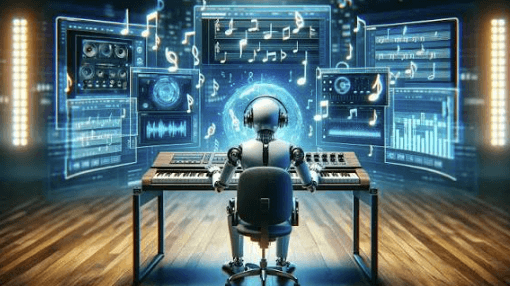
Artificial intelligence accelerates ideation and expands sonic palettes in the music studio. It analyzes trends, proposes presets, and automates routine tasks, while human judgment preserves nuance and intentionality. Collaboration treats algorithms as a medium that intertwines cognition with material practice. Reproducibility, tonal control, and ethical guardrails frame tool use, yet ownership, authorship, and originality remain contested. The balance between computation and conscience signals a boundary to test, and a question to pursue as tools evolve.
AI initiatives have integrated into the music studio by accelerating idea generation, expanding sonic palettes, and automating routine tasks. In this environment, algorithms digest trends, propose presets, and scaffold experiments, yet maintain discernment through human oversight.
The analysis considers machine ethics and copyright considerations, highlighting interdependencies between ownership, authorship, and originality while preserving creative autonomy amid computational scaffolding.
Artists increasingly approach computation as a collaborative medium, weaving cognitive processes with material practice to elicit emergent results.
In this framework, artists map intent to algorithmic routes, testing feedback loops that refine sound while preserving human agency.
The creativity machine serves as a catalyst, not a substitute, prompting reflection on collaboration ethics and the distribution of authorship across human and machine collaborators.
See also: Artificial Intelligence in Mental Health Support
The analysis emphasizes reproducibility, tonal control, and parameter transparency, revealing how algorithmic texture shapes texture and timbre.
Caution guards licensing hurdles, highlighting ownership, rights, and derivative implications.
Decisions converge on reliability, interoperability, and ethical guardrails, ensuring practical, adaptable workflows without surrendering artistic freedom.
The frontier of authorship in AI-aided music increasingly centers on how machine-generated outputs intersect with human nuance, intent, and accountability. This examination delineates authorship evolution as a societal negotiation, where transparency and attribution shape practice. The discourse treats human nuance as a defining constraint, guiding legitimacy, taste, and responsibility, while algorithms remain tools. Freedom surfaces through clarified ethics, measurable impact, and disciplined experimentation.
AI licensing models shift when AI-generated tracks emerge, redefining authorship and visibility; royalty distribution becomes more granular, and accountability increases. An analytical, experimental stance notes standardized metrics, transparency needs, and freedom-oriented adaptation within evolving licensing and payout frameworks.
AI can imitate certain genres with technical plausibility, but authenticity debates persist; success varies by cultural depth, training data, and intention. The analysis highlights risks of cultural appropriation and emphasizes rigorous evaluation to preserve genuine tradition.
AI in music creation raises ethical bias concerns, data provenance issues, AI legality questions, and copyright ethics debates; it is analyzed as an experimental, precise system where freedom-seeking listeners scrutinize transparency, accountability, and the moral implications of algorithmic originality.
Listeners perceive AI-created music as eliciting varied emotion perception and listener empathy, though ambiguity persists; satire aside, analyses show physiological and cognitive responses align with human-composed works, sparking debates on authenticity, agency, and aesthetic freedom in experimental contexts.
AI collaboration will augment human composers, not replace them, as computational creativity complements musical intuition and preserves human artistry; innovations emerge through experimentation, yet autonomy remains tied to subjective interpretation, ethical consideration, and a desire for freedom in art.
Artificial intelligence accelerates ideation while exposing limits of autonomy. Algorithmic presets hum with possibility; human nuance reframes intent and choice. Reproducibility and transparency anchor experimentation, yet ownership remains negotiated, not earned by computation alone. Tools expand sonic palettes, but discernment curates meaning. In this partnership, computation resembles a mirror and a loom: it reflects current practice while weaving new forms. The future of authorship rests not in dominance of machine or human, but in deliberate, collaborative negotiation.